
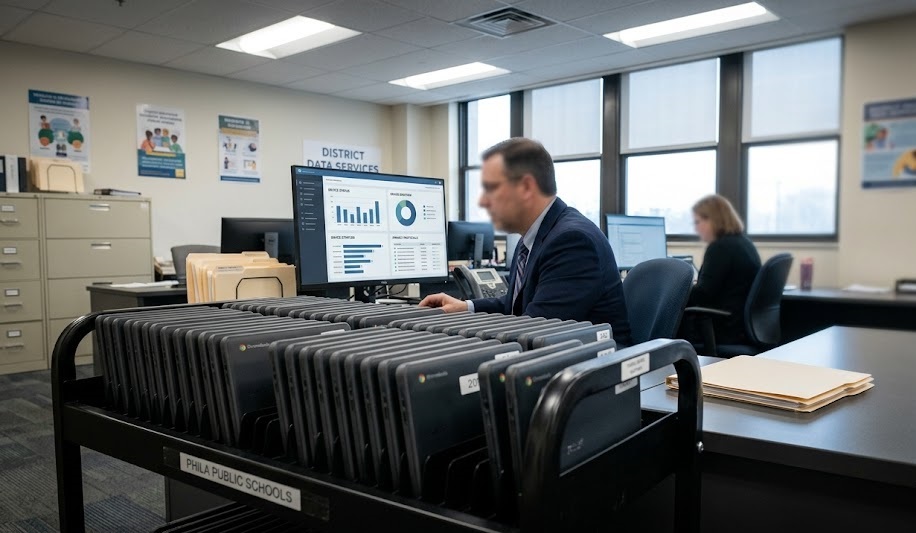
Philadelphia’s Chromebook dispute is not only a screen-time story. It is a student-data governance story. In late June 2026, Axios Philadelphia reported that the School District of Philadelphia does not give parents routine access to their children’s browsing history on district-issued Chromebooks, while the district can access that data in limited circumstances, including emergencies, technical support issues, and law enforcement requests. District spokesperson Monique Braxton also told Axios the district was not then considering Chromebook reductions or classroom screen-time limits.
That creates a difficult public-policy question for the nation’s large urban districts: if schools issue devices to every student, manage the network, control filtering, and retain access to certain usage data, what should families be able to see? Philadelphia’s dispute shows how the edtech backlash is moving beyond “how much screen time is too much?” and into a more specific accountability debate about browsing logs, student privacy, parent rights, instructional purpose, and district transparency.
Why Philadelphia’s Chromebook Policy Became A Parent Transparency Issue
The School District of Philadelphia says it issues a Chromebook to every district student. Charter school families are directed to contact their charter school for separate details, but for district-run schools, the one-to-one device model is already part of everyday learning infrastructure. That matters because a districtwide device program changes the relationship between school technology and family oversight. A Chromebook is not just a tool students borrow occasionally. It can become the default doorway to assignments, classroom platforms, research, assessments, messages, and digital learning routines.

Axios Philadelphia’s June 29, 2026 report turned that routine infrastructure into a transparency issue by focusing on a basic parent question: can families see what their children are doing online on district-issued devices? According to the report, the district does not provide browsing histories to parents as a regular practice. The district retains access in narrower cases, including emergencies, troubleshooting, and law enforcement requests.
The district’s official family resources page confirms the scale of the program and says every district student receives a Chromebook through the School District of Philadelphia Chromebook guidance. That scale raises the stakes. In a district serving more than 100,000 students, even a narrow data-access rule affects thousands of families, teachers, administrators, and students.
Philadelphia’s issue also sits inside the same national conversation that shaped FCC E-Rate screen-time accountability. As federal and local officials reconsider what school connectivity should fund, parents are asking whether the systems built to expand digital access now need clearer rules for monitoring, data access, content filtering, and screen exposure.
What Parents Are Asking To See
The parent concern is practical. Many families are not asking for a technical audit of every district network. They want to know whether a child is using a school-issued Chromebook for classwork, unrelated browsing, games, videos, messaging, or sites that should have been blocked. That concern becomes sharper for younger students, students with attention challenges, and families that limit recreational screen time outside school.
Axios followed its June 29 report with a July 2 reader response item saying 90% of 30 respondents to an informal Axios Philadelphia poll thought Philly educators should reduce classroom screen time. The sample is small and not scientific, so it should not be treated as a districtwide public-opinion survey. It does show that the browsing-history story touched a larger worry: parents suspect that schools may not know, or may not disclose, how much digital activity is happening during the school day.
The policy problem is that browsing history can be both a safety record and a privacy record. It may reveal whether a student encountered inappropriate material, was off task, or needed help. It may also reveal sensitive searches about health, family problems, religion, identity, immigration concerns, bullying, mental distress, or other private matters. A district cannot treat browsing logs as a casual parent dashboard without considering what type of data it is exposing.
That is why the “who gets to see it?” question has no simple answer. Parents have legitimate oversight interests. Students have privacy interests. Schools have safety and operational responsibilities. Vendors may have technical access depending on the monitoring system. Law enforcement requests raise a separate disclosure concern. A strong policy has to define each access lane clearly instead of relying on case-by-case explanations after parents ask.
Where FERPA Helps And Where It Leaves Questions
The Family Educational Rights and Privacy Act gives parents certain rights to inspect and review their child’s education records at schools that receive U.S. Department of Education funds. The Department of Education’s parent guide says a school or state educational agency must provide a parent with an opportunity to inspect and review education records within a reasonable period of time, not more than 45 calendar days after a request.

That federal rule is important, but it does not automatically answer every Chromebook browsing-history dispute. FERPA turns partly on whether the record is directly related to a student and maintained by an educational agency, institution, or party acting for it. Some digital records may fit that definition. Others may be temporary technical logs, cybersecurity records, vendor-held records, system metadata, or data that a district does not treat as a student education record.
The relevant federal guidance begins with the FERPA parent guide, but Philadelphia’s dispute shows why districts need local clarity. Families should not have to guess whether browsing history is an education record, a device-management log, a safety record, a technical support file, or something the district will not release except in special circumstances.
The School District of Philadelphia’s board policy directory says district policies function as governance tools and resources for administrators, employees, students, parents, families, residents, and other stakeholders. Policy 237 on student use of electronic devices recognizes that electronic devices can be used for educational purposes and that schools should maintain safe and secure learning environments. Related procedures say schools should review protocols, acceptable-use rules, and safe internet practices with students, staff, and families.
That policy framework is helpful but not enough by itself. A modern Chromebook transparency policy should say whether parents can request browsing logs, what time period can be reviewed, what redactions may apply, who approves disclosure, how students are notified, what happens in an emergency, and how vendor-held records are handled.
Why COPPA And EdTech Vendor Rules Matter Too
The Children’s Online Privacy Protection Act adds another layer when digital tools collect personal information from children under 13. The Federal Trade Commission’s COPPA guidance explains that online operators generally need verifiable parental consent before collecting, using, or disclosing personal information from children. In school contexts, long-running FTC guidance has allowed schools to consent on behalf of parents in limited education-use situations, but that school consent depends on the data being used for educational purposes and not for unrelated commercial exploitation.
That matters because Chromebook browsing data rarely exists in isolation. District-issued devices may connect to Google systems, learning management platforms, filtering tools, classroom monitoring software, assessment systems, educational apps, and security tools. Some logs may be controlled by the district. Some may be processed by vendors. Some may be available to teachers or administrators only through dashboards. Some may be retained for short periods, while other records may last longer.
The FTC’s COPPA compliance guidance is not a parent portal manual for school Chromebooks. It does point to the central concern: children’s data should be collected and used for clear, limited purposes. When a district requires technology use, it should be able to explain which platforms collect data, why the data is needed, how long it is kept, and who can view it.
Philadelphia’s transparency dispute therefore belongs in the same category as broader student-data privacy questions. Parents are not only asking to supervise their children. They are asking whether a public institution has created a monitoring system that gives schools access to information families cannot see. Even when the district has reasonable safety and operational reasons for limited disclosure, public trust weakens when the rule is not easy to understand.
What A Better Browsing-Data Policy Could Include
A stronger Philadelphia Chromebook transparency policy would not need to turn every parent into an IT administrator. It would need to give families a clear map of access, limits, safeguards, and appeals.
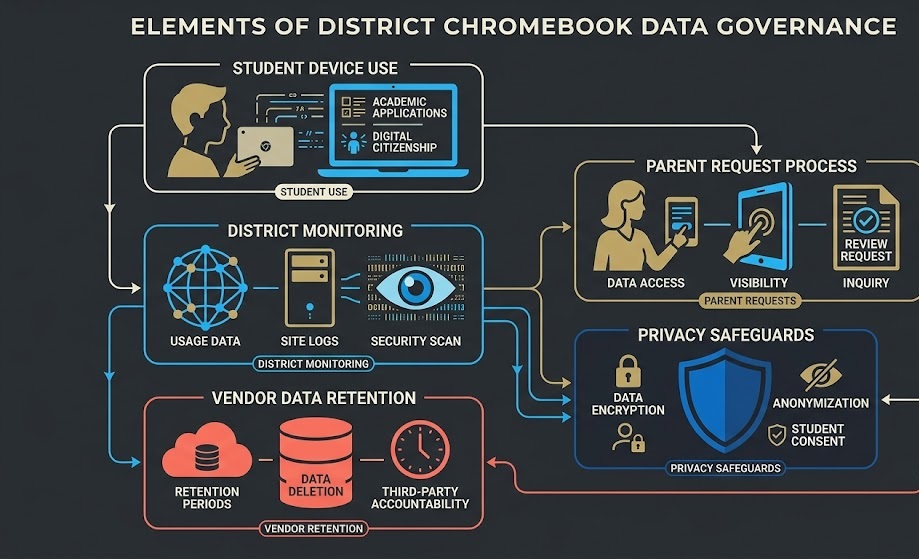
The district could begin by publishing a plain-language data inventory. That inventory would identify what Chromebook data is collected, whether it is browsing history, search history, application use, device location, login records, filtering alerts, classroom-monitoring screenshots, or technical diagnostics. It should identify whether each category is held by the district, Google, a filtering vendor, a classroom tool, or another third party.
The second step is an access matrix. Parents should know which records they can request, which records students can request, which records are available only to school staff, which records can be released in emergencies, and which records may be disclosed to law enforcement. If the district believes routine parent access to browsing history would expose sensitive student privacy interests, it should explain that openly and offer narrower alternatives.
| Data Category | Possible Access Rule | Public-Trust Question |
|---|---|---|
| Filtering alerts | Parent review when tied to a specific student concern | Can families see safety-related incidents involving their child? |
| Routine browsing logs | Limited access with redactions or defined request process | What student privacy interests must be protected? |
| Classroom app use | Parent-facing summary by platform or time band | Can families understand school-day screen exposure? |
| Vendor-held data | Contract-based disclosure and retention rules | Who controls the data after it leaves the district system? |
| Law enforcement requests | Documented process with legal review | How are families notified when allowed by law? |
The third step is a screen-use summary that does not expose sensitive details. A parent may not need every URL to understand whether a child is spending large blocks of time in educational platforms, streaming sites, games, or blocked-page attempts. A privacy-protective dashboard could show categories of use, time bands, or alerts without displaying every search or page title.
The fourth step is teacher authority. Families often worry about browsing data because they believe students are off task during class. If teachers have stronger controls to close tabs, limit browsing, lock students into assigned resources, or move lessons offline, the demand for after-the-fact surveillance may decrease.
Why The Dispute Is About Equity, Not Only Privacy
Philadelphia’s Chromebook debate should not be framed only as anxious parents versus modern technology. It is an equity issue because different families have different levels of time, legal knowledge, English-language access, digital literacy, and comfort challenging school systems. If browsing-data rules are unclear, the most connected parents may find workarounds while other families never learn what can be requested.
It is also an equity issue for students. Some students need digital tools for accessibility, translation, assistive communication, and individualized supports. Some need fewer distractions and more non-digital instruction. Some depend on district devices because they do not have reliable home technology. Some may use school devices for sensitive questions they are not ready to discuss with adults. A fair policy must account for all of those realities.
The School District of Philadelphia should not have to choose between unlimited parent access and no public explanation. The better path is structured transparency. Families should know what is collected, what is visible, what is protected, what is shared, and how to challenge a decision. Students should know which uses are monitored and which privacy interests are respected. Teachers should know how to keep students focused without becoming full-time digital police. District leaders should know whether device use is improving instruction or simply expanding screen exposure.
Philadelphia’s Chromebook dispute is a warning for every district with a one-to-one device program. Once schools issue devices to all students, browsing data becomes part of the education environment. The question is no longer whether schools can see some of it. The accountability question is whether families, students, and educators can understand the rules before there is a problem.