
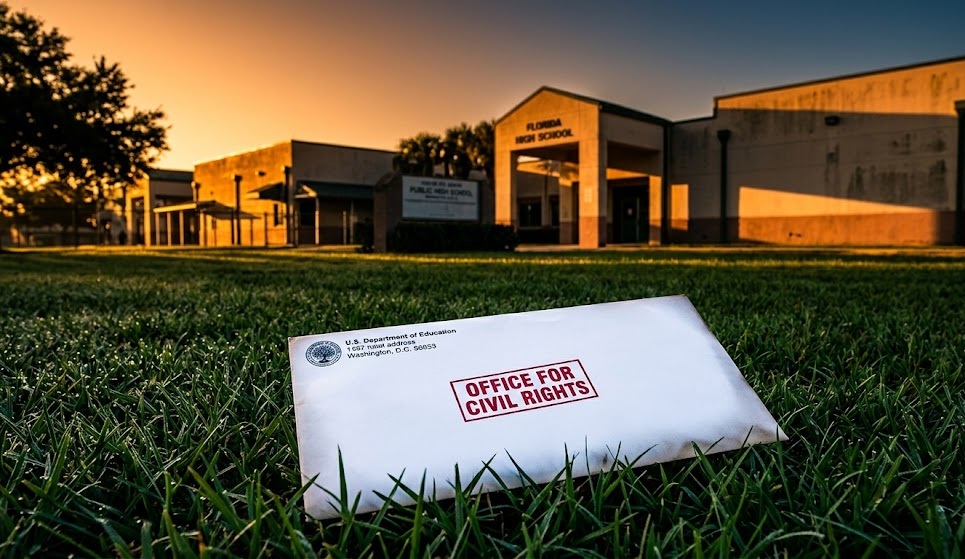
On May 8, 2026, the U.S. Department of Education’s Office for Civil Rights (OCR) announced the opening of a formal civil rights investigation into Bay District Schools in Florida. The federal probe focuses on whether the school district failed to meaningfully respond to pervasive, severe antisemitic harassment of students, thereby violating Title VI of the Civil Rights Act of 1964. Initiated in response to a detailed complaint filed jointly by the Anti-Defamation League (ADL) and the Akerman law firm on behalf of an 11th-grade student, the investigation shifts national attention toward the unique structural challenges of civil rights enforcement within K-12 environments.
The federal intervention follows a pattern of reported incidents at Mosley High School in Lynn Haven, Florida, where a hostile learning environment allegedly went unaddressed by school administrators for years. According to the federal civil rights enforcement guidelines released by the OCR, the district’s failure to act proactively highlights a critical point of vulnerability in public school administration: the tendency to handle systemic discrimination through isolated, reactive disciplinary measures rather than comprehensive compliance frameworks.
Federal Intervention and the Mosley High School Complaint
The complaint that triggered the federal probe paints a stark picture of unchecked bias within a public school classroom. According to legal filings, an 11th-grade Jewish student at Mosley High School endured years of targeted bullying that escalated significantly during the 2025–2026 academic year. The documented harassment included pervasive antisemitic stereotypes, conspiracy theories openly repeated by peers, and swastikas drawn directly into shared textbooks and across multiple campus locations.
The flashpoint of the controversy involved an in-class presentation during which a group of students openly performed Nazi salutes, mockingly wore yarmulkes, and displayed highly offensive antisemitic imagery. Rather than intervening to stop the display, a classroom teacher reportedly laughed and permitted the presentation to continue. A second faculty member similarly failed to halt the harassment. When the student and family sought remediation from school administrators, the district’s responses were deemed insufficient to guarantee the student’s safety, eventually forcing the family to withdraw the student from Mosley High School entirely and relocate to another state to preserve their well-being.
Anatomy of Institutional Failure: The Specific Allegations
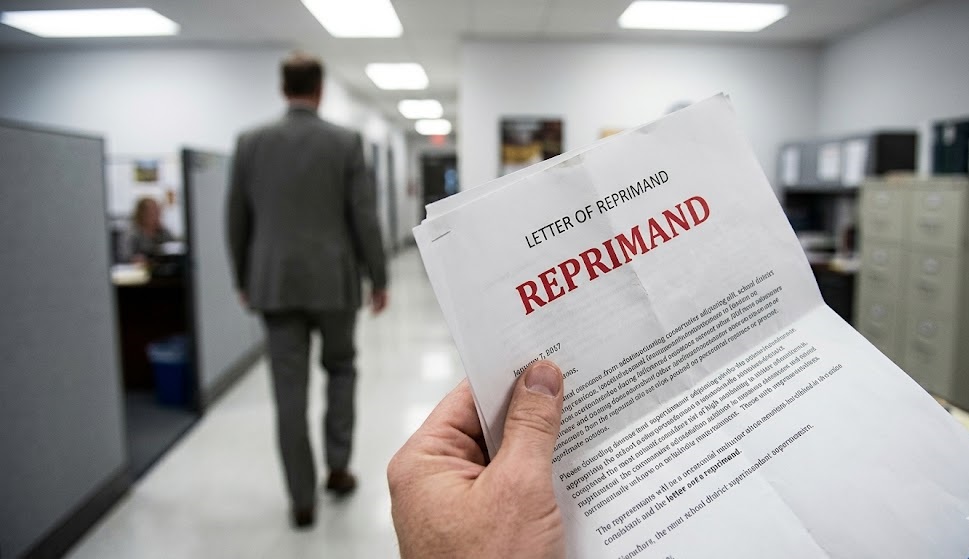
The Bay County investigation exposes a stark divergence between administrative policy compliance and the real-world experiences of targeted students. In response to the initial filing, Bay District Schools Superintendent Mark McQueen stated that the district acted aggressively against the offending students and issued a letter of reprimand to the teacher who laughed during the presentation. However, the joint complaint emphasizes that a simple reprimand added to a personnel file fails to remediate a broader, toxic campus climate.
Furthermore, the district’s primary response to the victim was the offer of individual counseling, a measure that critics argue shifts the burden of systemic bigotry onto the targeted student rather than correcting the institutional space. The failure to enact systemic reforms or address the second teacher involved left the intimidating environment intact, demonstrating how conventional K-12 disciplinary playbooks often fail to address the threshold of severe and pervasive harassment required under federal civil rights laws.
| Reported Dimension of Harassment | Documented Evidence & Student Impact | District Administrative Action |
|---|---|---|
| Pervasive Campus Vandalism | Swastikas scrawled in textbooks and across public school property over multiple terms. | General cleaning; no systemic educational interventions or tracking. |
| In-Class Presentation Abuse | Peer students performed Nazi salutes and displayed anti-Jewish imagery while wearing mock yarmulkes. | Single letter of reprimand placed in one faculty member’s personnel file; second teacher unpenalized. |
| Hostile Environment Escalation | Targeted student faced extreme emotional distress, forcing out-of-state withdrawal. | Offered student-focused counseling; failed to restructure classroom environment. |
The “Affirmative Obligation” Standard Under Title VI
Under Title VI of the Civil Rights Act of 1964, any educational institution receiving federal financial assistance is strictly prohibited from discriminating on the basis of race, color, or national origin, which encompasses shared ancestry or ethnic characteristics. Assistant Secretary for Civil Rights Kimberly Richey emphasized that school districts hold an “affirmative obligation” to intervene, fix the problem, and actively ensure that discrimination does not recur once they are put on notice. In K-12 systems, this standard is uniquely demanding because attendance is compulsory, and administrators stand in loco parentis for minor children.
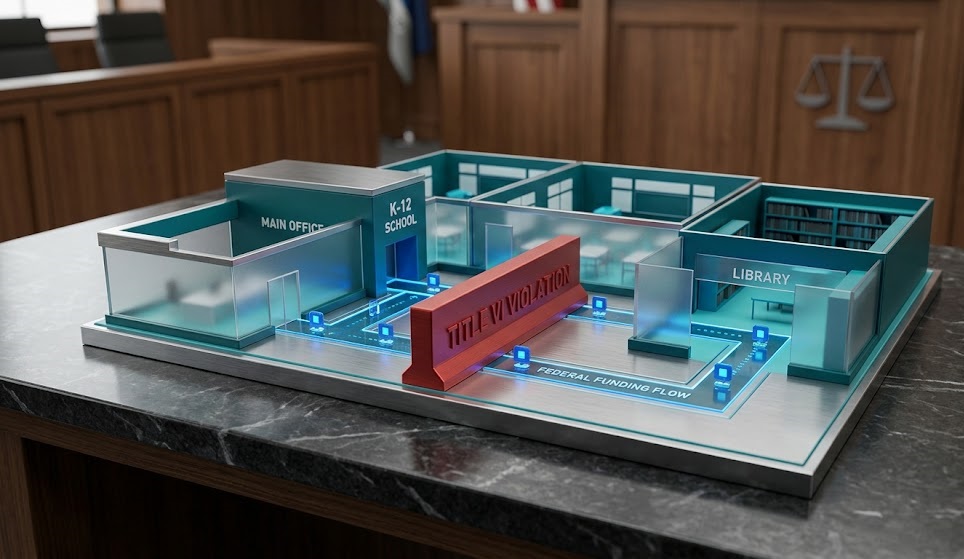
When a school district limits its response to treating hate speech as an isolated behavioral infraction, it misinterprets federal law. Title VI compliance demands that once an institution recognizes a hostile environment, it must implement an absolute remedy. This federal enforcement push aligns with parallel legal pressures unfolding across the country, where districts face severe accountability measures, as seen in recent K-12 anti-discrimination frameworks that penalize districts for failing to act against systemic bias. The Bay County case signals that federal regulators will no longer accept localized administrative insulation as an excuse for civil rights failures.
Shifting From Reactive Discipline to Systemic Prevention
The opening of the Bay County investigation is part of a broader federal mandate intensified by a January 2025 Executive Order focused on combating antisemitism across all federally funded programs. For K-12 public school districts, this environment requires an immediate overhaul of internal reporting and teacher training structures. Relying on compliance training that merely outlines prohibited behaviors is insufficient when faculty members themselves fail to recognize, or actively validate, classroom harassment.
To avoid federal intervention and protect student safety, school boards must transition to data-driven early warning systems that track complaints across schools, enforce immediate removal of discriminatory materials, and implement anti-bias curriculum interventions. The outcome of the Bay County probe will likely result in a mandatory resolution agreement, forcing the district to accept federal oversight, restructure its civil rights compliance offices, and submit to continuous monitoring. For public school districts nationwide, the lesson of Mosley High School is unambiguous: institutional safety cannot be maintained through bureaucratic minimization, and the failure to protect a single student can dismantle the legal legitimacy of an entire district.