
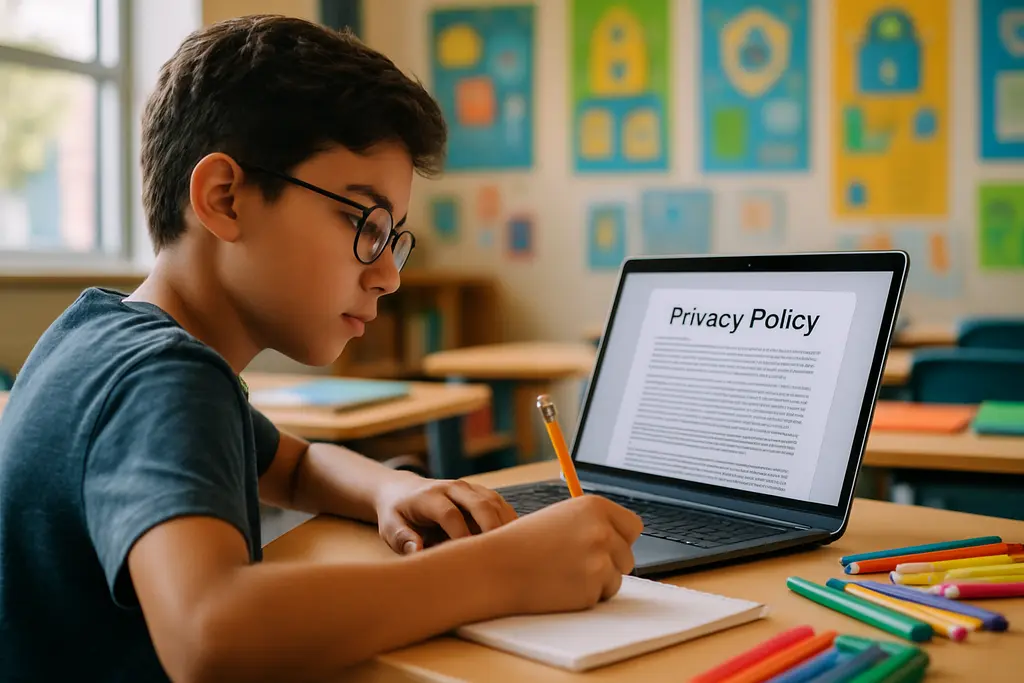
Student Data Protections became a more immediate community issue in California after Governor Gavin Newsom signed Assembly Bill 1159 on September 10, 2026. The new law bars technology companies from using student data to train or develop artificial intelligence models when their products are designed or marketed to students or used in California K-12 schools, community colleges and universities, according to CalMatters reporting. The debate has not produced a single community response. Educator groups and privacy advocates have treated the law as a needed guardrail, while technology and business organizations have warned that the measure may be too broad.
The reactions matter because they show how school communities are trying to separate two issues that often get merged: whether AI tools can support learning, and whether student information should be available for product development. That distinction is now central for school boards, college administrators, parent groups and classroom staff who have to apply state rules in daily decisions.
How Student Data Protections Changed The Debate
Why Student Data Protections Drew Support
AB 1159 expanded California’s student privacy framework to include college-level students. The earlier 2014 education privacy law applied strict protections to pre-K through K-12 data, while the new law extends the restriction to community colleges and universities. That shift is significant for families with older students, but also for faculty and administrators who have watched AI products move from optional classroom tools into campus-wide technology contracts.
Supporters at a June 22, 2026 hearing emphasized concerns about advertising, profiling and resale of student data. The research record identifies teachers’ unions, nurse unions and professor unions among supporters. Their stated concern was commercial exploitation of student data, not a blanket rejection of educational technology. In practical terms, those groups appear to be arguing that schools can experiment with technology while still drawing a legal line around the use of student records and activity data.
Student Data Protections now carry a wider institutional meaning. They are no longer only about whether a district sends information to a vendor. They also concern whether a vendor can use information gathered in an educational setting to train a system that may later be sold or deployed elsewhere. For communities, that difference can affect trust. Parents may accept a platform for grading, tutoring or accessibility support while objecting to the same platform using student interactions as training material.
Where Opposition Focused
Opposition did not center on a claim that student privacy is unimportant. The research notes identify TechNet, the Computer and Communications Industry Association and the California Chamber of Commerce among opponents. Their concern, as described in the hearing record and CalMatters reporting, was that the bill was too broad and could reduce access to beneficial services.
That argument deserves careful treatment. School communities have seen cases where strict procurement or data rules can slow adoption of tools that teachers believe are useful. At the same time, broad access to student information can create risks that families cannot evaluate on their own. The enacted law places the state on the side of limiting AI training uses, leaving local institutions to work with vendors on compliant products rather than relying on informal assurances.
Community Reactions Split By Risk And Access
Educators And Families Are Asking Different Questions
For families, Student Data Protections are often framed around consent and exposure. A parent may not know which digital tools collect written responses, behavioral signals, search activity or chat interactions. Even where data is not publicly disclosed, families may still ask whether the information is being used for purposes unrelated to instruction.
Educators have a related but somewhat different concern. Teachers and faculty need clear guidance before they recommend a tool, assign work through a platform or encourage students to use AI for drafts, research or feedback. If a district or campus cannot explain how student information is handled, classroom staff become the public face of decisions made through contracts they may not have reviewed.
This is why the law has generated both praise and caution. Supporters can point to a bright-line rule: student data covered by the law may not be used by covered companies to train or develop AI models. Critics can still ask how compliance will be monitored, how vendors will document their practices and whether smaller educational tools will withdraw from California rather than redesign data systems.
Local Trust Depends On Records Governance
The community response also fits a larger pattern in student privacy disputes. Families usually do not react only to the existence of technology. They react to uncertainty about what is collected, who receives it, how long it is retained and whether parents or students can obtain clear answers. The Parative Project has previously examined related questions in edtech privacy and classroom equity, where data practices became part of a wider debate about consent and access.
AB 1159 does not answer every operational question. It does not, based on the research provided, supply a public checklist for every district contract or every campus AI tool. That means local implementation will matter. Districts and colleges will need to identify which vendors are covered, whether a product is designed or marketed to students, and whether the tool is used in a California educational setting.
AI Limits Put Local Implementation On Districts
Campus AI Use Remains Uneven
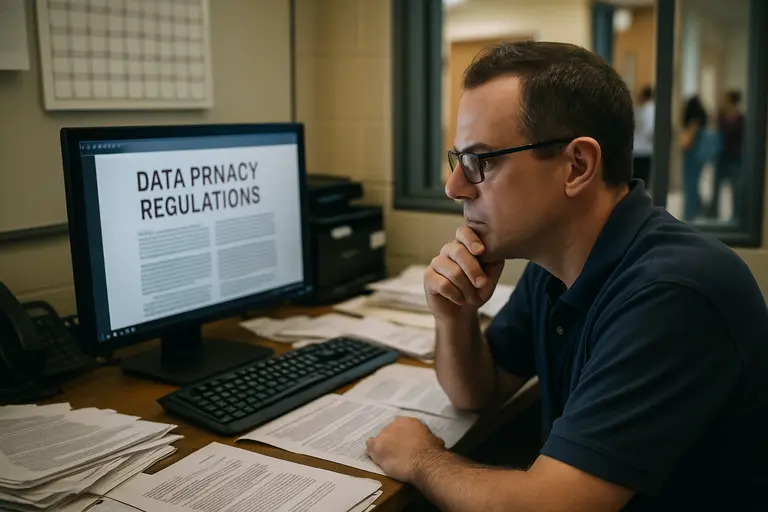
The research record points to California State University as one example of why the issue is not theoretical. CSU entered a $17 million contract with OpenAI for ChatGPT Edu in May 2026, serving a system of nearly 470,000 students. By April 2026, only 0.7% of students and 16% of faculty had completed voluntary training on the AI tools, according to the research notes. A separate survey cited in the notes found many users reporting positive educational effects, while complaints included inconsistent policy enforcement, fears of cheating and concerns about data sharing.
Those figures suggest a difficult implementation gap. A system may adopt an AI tool before most users have completed training on expectations, privacy and academic integrity. Community reaction in that setting is likely to be mixed. Some students and instructors may value access to AI tools for writing support, tutoring or productivity. Others may view the same rollout as premature if policy enforcement differs by course or campus.
Student Data Protections can reduce one risk without settling every campus AI question. The state can restrict AI training uses of student data, but institutions still have to decide how AI may be used in assignments, how to handle suspected misuse, and how much training should be expected before tools become part of regular instruction.
Child Safety Measures Add Another Layer
On September 10, 2026, Newsom also signed several child safety measures described by the Governor’s office as Adam’s Law. The package included restrictions affecting social media platforms, chatbot safety, age verification and collection of children’s data as a condition of access, according to the Governor’s announcement. These measures are separate from AB 1159, but communities are likely to experience them as part of the same policy turn: California is placing stronger limits on how technology companies interact with minors and students.
That can create public support among parents concerned about screen time, persuasive design and data misuse. It can also raise civil liberties and implementation questions, especially where age verification is involved. The research notes refer to criticism from the Electronic Frontier Foundation over a separate bill, AB 1709, but the provided materials do not establish its final status as of September 14, 2026. That uncertainty matters. Enacted laws, proposed bills and advocacy requests should not be treated as the same kind of legal event.
For readers tracking related news, EarthTimes provides coverage of technology, public institutions, and their community impact as part of the same network.
Student Data Protections And Community Trust
The practical test for California communities will be whether the new rules lead to clearer communication. A statute can ban a category of conduct, but families still need plain explanations from schools and colleges. Which tools are used? Which vendors receive student data? Are AI features enabled by default? What training is available for staff, students and parents? Who answers when a family asks whether a child’s information was used beyond instruction?
School districts and higher education systems should be careful not to treat privacy compliance as a back-office contract issue. Community trust is built in parent meetings, faculty senates, student government discussions and classroom guidance. If educators cannot explain the rules, even a strong state law may feel distant from daily practice.
Student Data Protections may also change vendor behavior. Companies that want access to California’s education market will need to show that their products do not use covered student data for AI model training or development in violation of the law. The research record does not yet show how enforcement will unfold, how many vendors will change contracts or whether access to services will narrow. Those are open questions, not established outcomes.
For now, the community reaction is best understood as cautious alignment around a basic principle: student information deserves special limits, even when AI tools offer educational promise. The disagreement is over scope, implementation and possible tradeoffs. California has now enacted a stronger legal rule. The next public measure will be whether districts, colleges, vendors and families can turn that rule into transparent practice without overstating what the law has already resolved.